
Liability or Legacy? What the Events Industry Can Teach Every Business About Smart Sustainability
If you’re throwing £50,000 worth of assets into a skip at the end of an event, you’ve failed.
Wood, graphics, IKEA pots and plants end up in skips all over the country every day and yet we still call these events a success. While you’ve been busy making money for your clients with their prospective customers, you’ve missed out on a commercial advantage by putting thousands of pounds' worth of social assets in the bin.
Maybe you’ve got too much on your plate and you “don’t have the time”. But that lack of responsibility is costing your client money and wasting a chance to share the benefits of the event with the wider community.
This isn’t theory. We’ve been making it happen.
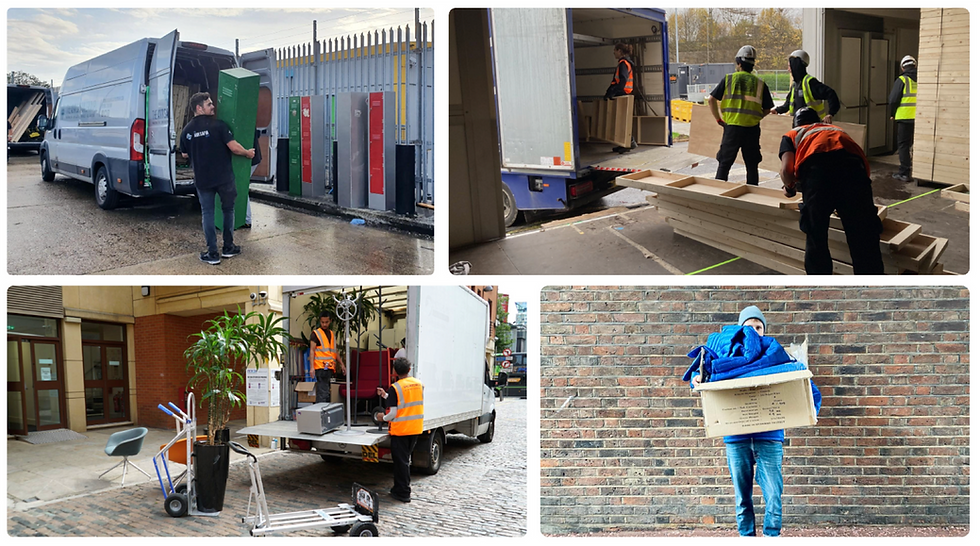
At Event Cycle, we’ve spent the last five years proving what happens when you treat event materials as assets, not waste:
£3,219,249 in social value created
247.70 tonnes of material kept out of landfill
1,085.38 tonnes of CO2e saved by avoiding new production
1,161 charities, community groups and social enterprises supported in the UK & Abroad
This is the commercial and social value sitting in your skip at the end of your events.
Reducing what you buy in the first place is an obvious saving. But the bigger opportunity is what happens next. When planned with intention, material donation can create a story to tell your attendees, a feel-good factor to share with your clients, and real, evidenced impact that goes beyond carbon figures not many people can easily understand.
Responsibility as a strategic advantage
The reason most sustainability talk feels like greenwashing is because it’s abstract. "Saving X tonnes of carbon" is just a number on a page to most people. But a photo of your event’s leftover furniture in a youth centre two miles down the road? That is proof.
Abstract sustainability gets reported. Visible impact gets shared.
When your stories are human and verifiable, people trust them. Your attendees and employees share them. Your community validates them. That is how you align your leadership, operational, HR, Comms, and Sustainability teams behind one single, effective action.
In one of the most creative, attention-grabbing industries in the world, we often fail to take responsibility for the changes we make that could reduce emissions and create community impact.
When you see a skip full of branded graphics or furniture, you aren't just looking at rubbish. You are looking at a financial liability. You are looking at items that could have supported a community project for months, but instead, you’re paying a waste company to take them to a hole in the ground. You are literally throwing money away.
The next time you walk past a skip during a de-rig, don't just see a bin. Ask yourself:
Is this an asset we've failed to manage?
Who could use this next?
Every piece of waste is a choice between a liability and a legacy. The question is, which one are you budgeting for?


